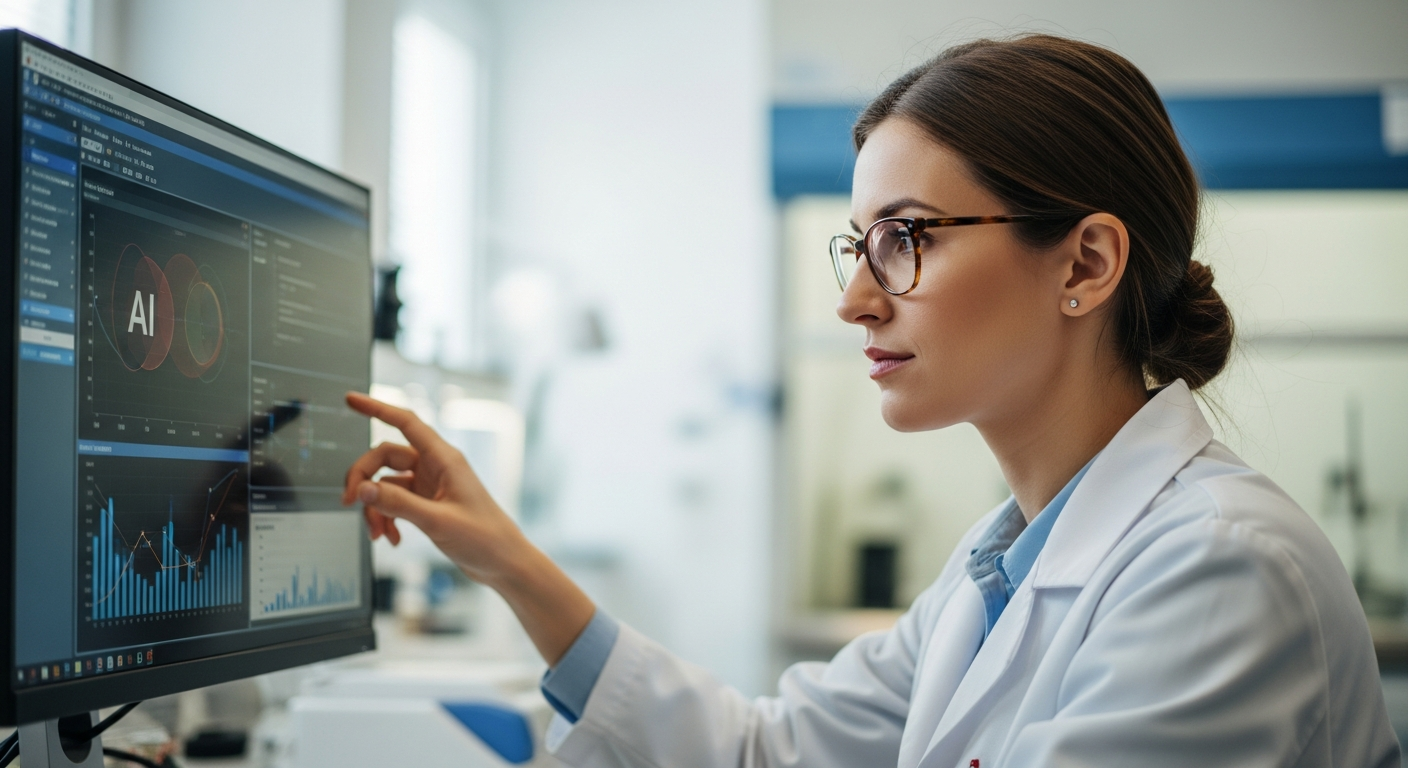

Artificial intelligence is revolutionizing numerous fields, and image analysis is no exception. The ability of AI to process and interpret visual data offers unprecedented opportunities for automation, efficiency, and insight generation. This article will guide you through the fundamentals of using AI for image analysis, exploring its applications, and highlighting the top platforms available.
We’ll also delve into practical examples across various industries to demonstrate the transformative power of this technology. Get ready to unlock visual insights and enhance your productivity with AI.
Whether you’re a seasoned data scientist or just curious about AI, this tutorial will provide you with the knowledge and tools to leverage AI for image analysis. Let’s start by understanding the basics.
Understanding the Basics of AI Image Analysis
AI image analysis involves using machine learning algorithms to automatically extract meaningful information from images. This process typically includes several steps, from preprocessing the image to training a model and interpreting the results.
At its core, AI image analysis relies on computer vision, a field of AI that enables computers to “see” and interpret images like humans. Computer vision algorithms analyze images by identifying patterns, shapes, and colors, allowing them to recognize objects, classify scenes, and even detect anomalies.
Object detection is a key component, allowing AI to identify and locate specific objects within an image. Image recognition, on the other hand, focuses on classifying the entire image based on its content.
These techniques are powered by deep learning models, particularly convolutional neural networks (CNNs), which are designed to automatically learn features from images. CNNs are trained on vast datasets of labeled images, enabling them to accurately recognize and classify new, unseen images.
Image preprocessing is crucial for improving the quality and consistency of the images used for training and analysis. This can involve resizing images, adjusting brightness and contrast, and removing noise.

Data augmentation is another important technique that involves creating new training images by applying various transformations to existing images, such as rotations, flips, and zooms. This helps to increase the size and diversity of the training dataset, which can improve the model’s generalization performance.
Feature extraction is the process of identifying and extracting relevant features from the images that can be used to train the AI model. These features can include edges, corners, textures, and colors.
Model training involves feeding the preprocessed images and extracted features to the AI model and adjusting its parameters to minimize the difference between its predictions and the ground truth labels. This process typically requires a large amount of data and computational resources.
Model evaluation is crucial for assessing the performance of the AI model and ensuring that it generalizes well to new, unseen images. This involves testing the model on a separate test dataset and measuring its accuracy, precision, and recall.
Interpreting the results of AI image analysis involves understanding the model’s predictions and identifying any patterns or trends that may be present in the data. This can provide valuable insights into the underlying processes that are being analyzed.
The choice of the right algorithm depends heavily on the specific task and the nature of the image data. Understanding the strengths and weaknesses of different algorithms is essential for achieving optimal results.
Furthermore, continuous learning and adaptation are key to maintaining the accuracy and relevance of AI image analysis models over time. Regular retraining with new data ensures that the model remains effective in a changing environment.
Key Applications of AI in Image Analysis
AI image analysis has found applications in a wide array of industries, transforming how businesses operate and make decisions. In healthcare, AI is used to analyze medical images like X-rays and MRIs, aiding in the early detection of diseases such as cancer.
Retailers leverage AI to monitor inventory, detect shoplifting, and enhance the customer experience through visual search. Manufacturing companies use AI to inspect products for defects, ensuring quality control and reducing waste.
Agriculture benefits from AI through the analysis of satellite and drone imagery, enabling farmers to monitor crop health, optimize irrigation, and detect pests. Security and surveillance systems utilize AI to identify suspicious activities, enhancing public safety and security.
The possibilities are endless, and as AI technology continues to advance, we can expect even more innovative applications to emerge. This technology is truly transformative.
In the automotive industry, AI is used for autonomous driving, enabling vehicles to perceive their surroundings and make decisions without human intervention. This includes tasks such as object detection, lane keeping, and traffic sign recognition.
The insurance industry utilizes AI image analysis to assess damage to vehicles and property, speeding up the claims process and reducing costs. This can involve analyzing photos of damaged cars or buildings to estimate the cost of repairs.
In environmental monitoring, AI is used to analyze satellite imagery to track deforestation, monitor pollution levels, and detect illegal mining activities. This can help to protect endangered species and preserve natural resources.
AI image analysis is also used in the entertainment industry for tasks such as facial recognition, motion capture, and visual effects. This can help to create more realistic and immersive experiences for viewers.
In the field of archaeology, AI is used to analyze aerial and satellite imagery to identify potential archaeological sites and artifacts. This can help to uncover new insights into human history and culture.
The application of AI in image analysis is also extending to the realm of art authentication. AI algorithms can analyze the brushstrokes, color palettes, and other stylistic elements of paintings to determine their authenticity.
Furthermore, AI-powered image analysis is being used to enhance accessibility for visually impaired individuals. Applications can describe the content of images in real-time, enabling them to better understand their surroundings.
These examples highlight the versatility and potential of AI in image analysis across various domains. The continued development of AI algorithms and the increasing availability of data will undoubtedly lead to even more innovative applications in the future.
Top AI Platforms for Image Analysis
Several AI platforms offer robust tools and services for image analysis, each with its own strengths and features. Google Cloud Vision AI is a popular choice, providing pre-trained models for image recognition, object detection, and facial analysis.
Amazon Rekognition offers similar capabilities, along with features for celebrity recognition and text detection in images. Here’s a quick comparison of some leading platforms.
| Platform | Key Features | Pricing |
|---|---|---|
| Google Cloud Vision AI | Pre-trained models, custom model training, OCR | Pay-as-you-go |
| Amazon Rekognition | Facial recognition, object detection, content moderation | Pay-as-you-go |
| Microsoft Azure Computer Vision | Image analysis, spatial analysis, face detection | Tiered pricing |
| Clarifai | Custom AI models, visual search, workflow automation | Subscription-based |
Microsoft Azure Computer Vision provides a comprehensive suite of tools for image analysis, including spatial analysis and face detection. Clarifai stands out with its focus on custom AI models and workflow automation, catering to more specialized needs.
TensorFlow is an open-source machine learning framework that is widely used for building and training custom AI models for image analysis. It provides a flexible and powerful platform for developing advanced computer vision applications.
PyTorch is another popular open-source machine learning framework that is known for its ease of use and flexibility. It is often preferred by researchers and developers who are working on cutting-edge AI models.
OpenCV is a library of programming functions mainly aimed at real-time computer vision. It is a powerful tool for image processing and analysis, offering a wide range of algorithms and functions.
Choosing the right platform depends on your specific needs and requirements. Consider factors such as the availability of pre-trained models, the ease of use, the cost, and the level of customization required.
Many platforms also offer cloud-based services, which can be beneficial for scaling your image analysis applications. Cloud services provide access to powerful computing resources and storage, allowing you to process large amounts of data quickly and efficiently.
The pay-as-you-go pricing model offered by some platforms can be a cost-effective option for smaller projects or for organizations that are just starting to explore AI image analysis. This allows you to pay only for the resources that you use.
Subscription-based pricing models may be more suitable for larger organizations that require a consistent level of service and support. These models typically offer a fixed monthly or annual fee for access to the platform’s features and resources.
Ultimately, the best way to choose the right platform is to try out a few different options and see which one works best for your specific needs. Most platforms offer free trials or demos that allow you to explore their features and capabilities.
How to Use AI for Object Detection
Object detection involves training an AI model to identify and locate specific objects within an image. This process typically begins with collecting a dataset of images that contain the objects you want to detect.
Each object in the images must be labeled with a bounding box, indicating its location. Several tools are available for labeling images, such as LabelImg and VGG Image Annotator (VIA).
Once you have a labeled dataset, you can train an object detection model using frameworks like TensorFlow or PyTorch. Popular object detection algorithms include YOLO (You Only Look Once) and Faster R-CNN, which offer a balance between speed and accuracy.
The training process involves feeding the labeled images to the model and adjusting its parameters to minimize the difference between its predictions and the ground truth labels. After training, you can evaluate the model’s performance on a separate test dataset to ensure it generalizes well to new images.
Data preparation is a critical step in object detection. Ensuring the data is clean, well-labeled, and representative of the objects you want to detect is paramount for achieving high accuracy.
Choosing the right object detection algorithm depends on factors such as the size of the objects, the complexity of the background, and the desired speed and accuracy. Experimentation with different algorithms is often necessary to find the best solution for a particular problem.
Transfer learning can be a valuable technique for object detection, particularly when you have a limited amount of training data. By using a pre-trained model as a starting point, you can significantly reduce the training time and improve the model’s performance.
Data augmentation techniques, such as random cropping, scaling, and rotation, can also be used to increase the size and diversity of the training dataset, which can improve the model’s generalization performance.
Evaluating the performance of an object detection model involves measuring its precision and recall. Precision measures the proportion of correctly detected objects, while recall measures the proportion of objects that were successfully detected.
Non-maximum suppression (NMS) is a technique used to remove duplicate bounding boxes that may be predicted by the model. NMS helps to improve the accuracy and clarity of the object detection results.
Object detection models can be deployed on a variety of platforms, including cloud servers, edge devices, and mobile devices. The choice of deployment platform depends on the specific requirements of the application.
Real-time object detection is becoming increasingly important in applications such as autonomous driving and security surveillance. Optimizing the model for speed and efficiency is crucial for achieving real-time performance.
Exploring Image Recognition Techniques with AI
Image recognition, also known as image classification, involves training an AI model to categorize an entire image based on its content. This is a fundamental task in computer vision and is used in a wide range of applications, from identifying types of flowers to detecting fraudulent transactions.
The process typically begins with collecting a dataset of images, where each image is labeled with the category it belongs to. For example, you might have a dataset of images labeled as “cat,” “dog,” or “bird.”
Popular image recognition algorithms include convolutional neural networks (CNNs) like ResNet, Inception, and VGGNet. These models are designed to automatically learn relevant features from images, such as edges, textures, and shapes.
During training, the CNN is fed the labeled images, and its parameters are adjusted to minimize the difference between its predictions and the ground truth labels. Transfer learning is often used to speed up the training process and improve performance, where a pre-trained model (trained on a large dataset like ImageNet) is fine-tuned for the specific image recognition task.
Data augmentation plays a crucial role in improving the robustness and generalization ability of image recognition models. Techniques like rotation, scaling, and color jittering help the model learn to recognize objects under varying conditions.
The choice of the CNN architecture depends on the complexity of the image recognition task and the available computational resources. Deeper and more complex architectures, like ResNet-152, can achieve higher accuracy but require more training data and computational power.
Evaluating the performance of an image recognition model involves measuring its accuracy, precision, and recall. Accuracy measures the overall proportion of correctly classified images, while precision and recall provide insights into the model’s performance for each individual category.
Fine-tuning a pre-trained model involves adjusting the parameters of the model to optimize its performance for the specific image recognition task. This typically involves training the model on a smaller dataset of labeled images.
Regularization techniques, such as dropout and weight decay, can help to prevent overfitting and improve the model’s generalization performance. Overfitting occurs when the model learns the training data too well and fails to generalize to new, unseen images.
Ensemble methods, such as averaging the predictions of multiple models, can often improve the accuracy and robustness of image recognition systems. Ensemble methods can help to reduce the impact of individual model errors.
Image recognition models can be deployed on a variety of platforms, including cloud servers, edge devices, and mobile devices. The choice of deployment platform depends on the specific requirements of the application.
The development of new and improved image recognition techniques is an ongoing area of research. Researchers are constantly exploring new architectures, training methods, and regularization techniques to improve the accuracy and efficiency of image recognition systems.
Practical Examples of AI Image Analysis in Different Industries
AI image analysis is transforming industries across the board, offering solutions to complex problems and driving innovation. Here are a few practical examples of how AI is being used in different sectors.
In healthcare, AI is used to analyze medical images like X-rays, CT scans, and MRIs, aiding in the early detection of diseases such as cancer, Alzheimer’s, and heart disease. AI algorithms can identify subtle patterns and anomalies that might be missed by human radiologists, improving diagnostic accuracy and patient outcomes.
- Detecting tumors in X-ray images
- Analyzing retinal scans for diabetic retinopathy
- Identifying skin lesions for early melanoma detection
- Monitoring crop health using drone imagery
- Predicting yield and optimizing irrigation
In agriculture, AI is used to analyze satellite and drone imagery, enabling farmers to monitor crop health, optimize irrigation, and detect pests and diseases. AI algorithms can identify areas of stress or nutrient deficiency, allowing farmers to take targeted action and improve crop yields.
In retail, AI is used to analyze video footage from security cameras to detect shoplifting and other fraudulent activities. AI algorithms can also be used to track customer behavior in stores, providing valuable insights into shopping patterns and preferences.
In manufacturing, AI is used to inspect products for defects, ensuring quality control and reducing waste. AI algorithms can identify even the smallest imperfections that might be missed by human inspectors.
In the automotive industry, AI is used for autonomous driving, enabling vehicles to perceive their surroundings and make decisions without human intervention. AI algorithms can identify objects, navigate roads, and avoid obstacles.
In the security and surveillance industry, AI is used to analyze video footage to detect suspicious activities and identify potential threats. AI algorithms can recognize faces, track movements, and detect unusual patterns of behavior.
In the environmental monitoring industry, AI is used to analyze satellite imagery to track deforestation, monitor pollution levels, and detect illegal mining activities. AI algorithms can identify changes in land cover, measure air and water quality, and detect the presence of pollutants.
These examples demonstrate the wide range of applications for AI image analysis across different industries. As AI technology continues to advance, we can expect to see even more innovative uses for this powerful tool.
The use of AI in satellite imagery analysis is revolutionizing urban planning. By analyzing aerial images, AI can identify areas with high population density, assess infrastructure needs, and optimize resource allocation.
Ethical Considerations in AI Image Analysis
As AI image analysis becomes more prevalent, it’s crucial to consider the ethical implications of this technology. One major concern is bias in AI models. If the training data used to develop an AI model is biased, the model may perpetuate and amplify those biases in its predictions.
For example, if a facial recognition system is trained primarily on images of one race or gender, it may perform poorly on individuals from other groups. This can lead to unfair or discriminatory outcomes, particularly in applications like law enforcement and security.
Another ethical consideration is privacy. AI image analysis often involves collecting and processing large amounts of visual data, which may contain sensitive information about individuals. It’s essential to ensure that this data is handled responsibly and that individuals’ privacy rights are respected.
Transparency is also important. AI models can be complex and opaque, making it difficult to understand how they arrive at their predictions. This can raise concerns about accountability and trust, particularly in high-stakes applications.
Data security is paramount. Protecting the data used to train and operate AI image analysis systems from unauthorized access and misuse is crucial to maintaining ethical standards.
Algorithmic transparency is key to building trust in AI image analysis systems. Understanding how the algorithms work and what factors influence their decisions is essential for ensuring fairness and accountability.
Bias mitigation techniques can be used to reduce the impact of bias in AI models. These techniques involve carefully selecting and preprocessing the training data to ensure that it is representative of the population that the model will be used on.
Privacy-preserving techniques, such as differential privacy and federated learning, can be used to protect individuals’ privacy while still allowing AI models to be trained on sensitive data. These techniques involve adding noise to the data or training the model on decentralized data sources.
Explainable AI (XAI) techniques can be used to make AI models more transparent and understandable. XAI techniques provide insights into the factors that influence the model’s predictions, allowing users to understand why the model made a particular decision.
Regular audits and evaluations can help to ensure that AI image analysis systems are operating ethically and fairly. These audits should assess the model’s performance on different demographic groups and identify any potential sources of bias.
Establishing clear guidelines and regulations for the development and deployment of AI image analysis systems is essential for promoting ethical and responsible use of this technology. These guidelines should address issues such as data privacy, algorithmic transparency, and bias mitigation.
Open dialogue and collaboration between researchers, developers, policymakers, and the public are crucial for addressing the ethical challenges posed by AI image analysis. By working together, we can ensure that this technology is used for the benefit of all.
Future Trends in AI Image Analysis
The field of AI image analysis is constantly evolving, with new techniques and applications emerging all the time. One major trend is the increasing use of deep learning models, particularly transformers, which have shown remarkable performance on a variety of image analysis tasks.
Another trend is the development of more robust and explainable AI models. Researchers are working on techniques to make AI models more resistant to adversarial attacks and to provide explanations for their predictions, improving trust and accountability.
The integration of AI image analysis with other technologies, such as augmented reality (AR) and virtual reality (VR), is also expected to drive innovation. AR and VR applications can use AI to understand the visual environment and provide users with context-aware information and experiences.
Edge computing, where AI models are deployed on devices like smartphones and cameras, is also gaining traction. This enables real-time image analysis without the need for a constant internet connection, opening up new possibilities for applications in remote or resource-constrained environments.
Self-supervised learning is emerging as a powerful technique for training AI models with limited labeled data. This approach allows models to learn from unlabeled data by creating their own labels, reducing the need for expensive and time-consuming manual annotation.
Generative adversarial networks (GANs) are being used to generate realistic images and videos, which can be used for data augmentation, image editing, and creating synthetic training data. GANs can also be used to create deepfakes, raising ethical concerns about the potential for misuse.
The development of more efficient and lightweight AI models is crucial for deploying AI image analysis on resource-constrained devices. Techniques such as model compression and quantization are being used to reduce the size and computational complexity of AI models.
The integration of AI image analysis with robotics is enabling robots to perform complex tasks in unstructured environments. Robots can use AI to perceive their surroundings, navigate obstacles, and manipulate objects.
The use of AI image analysis in healthcare is expected to continue to grow, with new applications emerging in areas such as drug discovery, personalized medicine, and remote patient monitoring. AI can help to improve diagnostic accuracy, accelerate drug development, and personalize treatment plans.
The development of more robust and reliable AI image analysis systems is essential for deploying this technology in safety-critical applications. Techniques such as adversarial training and uncertainty estimation can help to improve the robustness and reliability of AI models.
The increasing availability of data and computing resources is driving the development of more powerful and sophisticated AI image analysis systems. As data and computing resources become more accessible, we can expect to see even more innovation in this field.
The future of AI image analysis is bright, with new techniques and applications emerging all the time. By staying up-to-date with the latest trends and developments, we can harness the transformative potential of this technology to solve some of the world’s most pressing challenges.
Getting Started with AI for Image Analysis
If you’re interested in getting started with AI for image analysis, there are several resources available to help you learn and experiment. Online courses and tutorials can provide you with the foundational knowledge you need to understand the concepts and techniques involved.
Frameworks like TensorFlow and PyTorch offer a wide range of tools and libraries for building and training AI models. Many pre-trained models are also available, which can be fine-tuned for specific image analysis tasks, saving you time and effort.
Open-source datasets, such as ImageNet and COCO, provide a wealth of labeled images that you can use to train and evaluate your models. Cloud-based AI platforms, like Google Cloud Vision AI and Amazon Rekognition, offer easy-to-use APIs and services for image analysis, allowing you to quickly integrate AI into your applications.
Start with a simple project, such as image classification or object detection, and gradually work your way up to more complex tasks. Don’t be afraid to experiment and learn from your mistakes.
Consider enrolling in online courses offered by platforms like Coursera, Udacity, and edX. These courses provide structured learning paths and hands-on projects to help you master the fundamentals of AI image analysis.
Explore the documentation and tutorials provided by TensorFlow and PyTorch. These resources offer detailed explanations of the frameworks’ features and capabilities, as well as step-by-step guides for building and training AI models.
Leverage pre-trained models from model zoos like TensorFlow Hub and PyTorch Hub. These model zoos offer a wide range of pre-trained models that can be easily integrated into your own projects.
Participate in online communities and forums, such as Stack Overflow and Reddit, to ask questions and get help from other AI practitioners. These communities can provide valuable support and guidance as you learn and experiment with AI image analysis.
Contribute to open-source projects related to AI image analysis. This is a great way to learn from experienced developers and contribute to the advancement of the field.
Attend conferences and workshops on AI image analysis. These events provide opportunities to learn from experts, network with other practitioners, and stay up-to-date with the latest trends and developments.
Read research papers on AI image analysis to gain a deeper understanding of the underlying concepts and techniques. Research papers can provide valuable insights into the latest advances in the field.
Practice, practice, practice! The best way to learn AI image analysis is to build and train your own models. Start with simple projects and gradually work your way up to more complex tasks.
Conclusion
AI for image analysis is a powerful tool that can unlock visual insights and enhance productivity across various industries. By understanding the basics of AI image analysis, exploring its applications, and leveraging the top platforms available, you can harness the transformative potential of this technology.
Remember to consider the ethical implications and stay up-to-date with the latest trends in the field. With the right knowledge and tools, you can leverage AI to gain a competitive edge and drive innovation in your organization.
The future of AI image analysis is bright, with endless possibilities for innovation and impact. Embrace the challenge, explore the opportunities, and contribute to the advancement of this exciting field.
By continuously learning and experimenting, you can unlock the full potential of AI image analysis and transform the way we see and understand the world around us. The journey is just beginning!