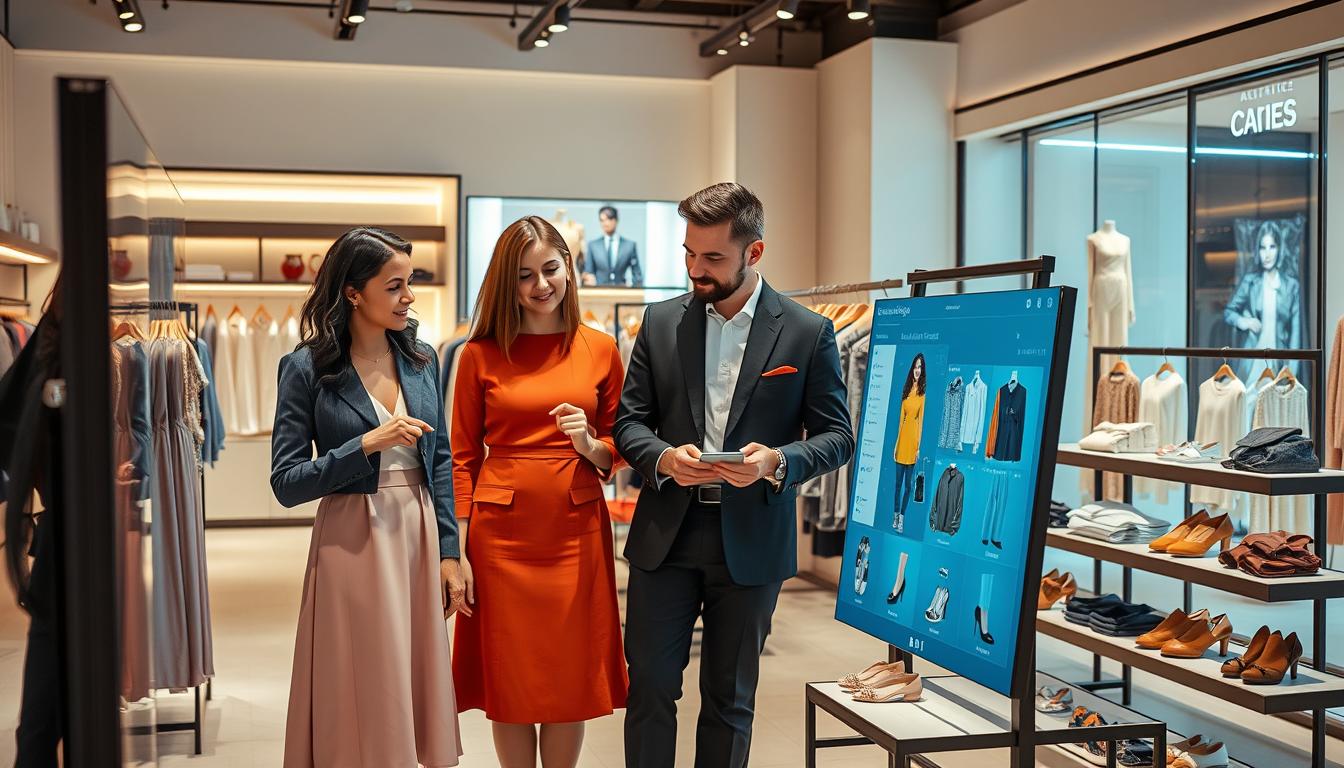
This buyer’s guide explains how an AI upsell clothing store approach helps retailers sell complete looks, not just extra items.
Personalized recommendations and shoppable outfits make the online shopping journey feel curated, much like working with a stylist. Retailers use tools that build bundles, suggest fit, and show imagery so shoppers can visualize items.
Teams in the United States—ecommerce-first apparel teams, omnichannel merchants, and marketplace brands—will find practical criteria for choosing solutions. We contrast basic cross-sells with intelligent, behavior-driven offers that match inventory and style signals.
Expect clear outcomes: a stronger onsite experience, higher order values, improved merchandising efficiency, and fewer returns thanks to fit guidance and try-on features.
The guide also points to real-world lifts from recognizable names like JD Sports and Men’s Wearhouse to show measurable results.
Key Takeaways
- Smart recommendations build full looks and increase cart size.
- This guide targets US apparel teams and omnichannel retailers.
- Advanced systems use behavior, inventory, and style signals.
- Main benefits: better experience, higher AOV, fewer returns.
- Real brand examples prove measurable lifts in conversion.
- Evaluation covers capabilities, integrations, and time-to-value.
Why AI upselling matters for apparel retailers in the United States
When online recommendations reflect a shopper’s taste, baskets grow and conversion climbs. In a competitive US market with high paid-media costs, lifting average order value and conversion beats simply driving more traffic.
What “better upsells” look like
Better offers are measurable: higher average order, more units per transaction, improved conversion rate, and greater revenue per visitor. Tools that guide customers to complete looks drive these gains.
How personalization meets shopper expectations
McKinsey finds 71% of consumers expect personalized interactions. Recommendations that use browsing and purchase history and real-time behavior surface items that feel relevant.
Generic “related products” often fail because shoppers need styling context, size confidence, and a clear reason to add an item. A digital sales associate effect reduces choice overload and speeds decisions.
- Why now: tight margins and fierce competition.
- Data that powers relevance: product catalog, customer behavior, history, and merchandising insights—handled with privacy-safe practices.
AI upsell clothing store: core capabilities to prioritize when buying
High-quality suggestion systems transform product views into outfit ideas that increase multi-item purchases. Focus on capabilities that move a shopper from interest to a completed look while protecting margins and inventory health.
Personalized recommendations
What to demand: systems must use browsing history, purchase history, returns signals, and onsite behavior to make relevant recommendations.
That mix reduces irrelevant suggestions and helps drive confident add-ons that lift average order and units per transaction.
Outfitting and bundling
Outfit generation should propose compatible pieces—tops, bottoms, shoes, outerwear, and accessories—in one flow. Bundles must be editable by merchants so teams can pin hero products and exclude low-margin SKUs.
Dynamic “You may also like”
Go beyond same-category swaps. Modules should surface complementary items that complete an outfit and increase items per order while respecting current stock levels.
Visual merchandising and omnichannel continuity
Merch modules must adapt to shopper preferences and styles, update as insights change, and support “shop the model” storytelling on key pages and in email.
Finally, ensure the same outfitting logic works across site pages, email placements, and in-store tools so experiences stay consistent.
Product pages that sell: AI-powered PDP upsells and cross-sells
Product pages are the moment of truth: they convert interest into multi-item purchases when presented as styling moments. The PDP is where add-to-cart happens, so outfitting here directly affects purchases and order size.
Turning PDPs into styling experiences with shoppable outfits
Many fashion product pages are too transactional. They show a single SKU with no styling context. Replacing static blocks with shoppable outfits helps shoppers add multiple items quickly.
Reducing decision fatigue with curated pairings by size, style, and pricing
Show a small set of high-confidence options filtered by size and price. Curated pairings cut choice overload and speed purchases while matching shopper intent.
Inventory-aware recommendations that avoid promoting out-of-stock items
Never promote unavailable SKUs. Modules should reflect live inventory, swap alternatives when stock falls, and prioritize in-stock complements to protect conversion.
What success looks like in practice: “Complete the Look” merchandising in action
“On sneaker PDPs, pairing a Nike Air Force 1 with joggers, hoodie, and cap moved the page from ‘buy one’ to ‘build an outfit.'”
JD Sports reported gains in units per transaction, conversion, and AOV when complete-look modules were present.
| Metric | Without outfitting | With shoppable outfits |
|---|---|---|
| Items per order | 1.1 | 1.8 |
| Conversion impact | Baseline | +12% |
| Time on pages | Short, confused | Longer, purposeful |
| Inventory handling | Static modules | Live stock swaps |
Buyer’s-checkpoint: require reporting that ties PDP modules to incremental sales lift, not just clicks. That data justifies continued investment and operational change.
Reducing return rates while increasing order value with fit and virtual try-on
When fit uncertainty drops, return rates fall and customers buy more with confidence. Fashion returns are often driven by wrong sizes, so every avoided return protects margin and builds trust. Framing fit as both a profit and experience problem helps teams prioritize solutions.
Practical size recommendations use basic inputs—height, weight, and purchase history—then blend in returns and anthropometric signals to suggest the best size. Good guidance lists the recommended size and explains how adjacent sizes will fit (tighter or looser) so shoppers choose by preference.
Virtual fitting room and digital twins
Virtual fitting rooms should show proportions, drape, and styling for categories like denim and tailoring. Avatar-based digital twins, such as PICTOFiT from Reactive Reality, create a body-like visualization from a selfie and measurements to set realistic expectations.
When shoppers trust that a core item will fit, they are likelier to add complementary pieces, lifting order value without heavy discounting.
- Placement: put fit tools adjacent to the size selector and above key friction points to maximize usage.
- Buyer checklist: ask how sizing is validated, how edge cases are handled, and how recommendations are explained to customers.
- Pricing note: evaluate ROI against avoided returns and exchanges, not just immediate conversion gains.
AI shopping assistants that upsell without hurting the customer experience
A conversational assistant can remove friction at key moments and turn hesitation into purchases. These tools act like a helpful associate: they answer sizing and fabric questions, suggest styling, and compare products side-by-side.
Pre-purchase help: sizing, fabric, fit, styling, and product comparisons
Good guidance prevents abandonment. Offer instant size tips, explain fabric feel, and show fit notes so a customer chooses faster.
Compare two products on price, fit, and use case when shoppers ask. Suggest complementary items—like a belt or care kit—based on stated intent, not templates.
Post-purchase support: order tracking, returns, refunds, and exchanges
Fast order updates and clear returns paths keep customers loyal. Quick resolution on exchanges and refunds protects repeat purchases and reduces support load.
Escalation to customer service teams and how to maintain brand voice
Crescendo.ai bundles chat, voice, SMS and email ticket resolution and integrates with Shopify, WooCommerce, and Salesforce to scale without extra headcount.
When cases need human help, the assistant passes full context to customer service so the customer does not repeat details. Require tone guidelines, approved phrasing, and guardrails to preserve brand voice.
“Measure impact by conversion lift, deflection rate, resolution time, and revenue influenced—not chat volume.”
Inventory-led upsells: using AI to move stock predictably
Inventory-aware merchandising turns excess product into predictable revenue by steering attention to what you already have.
Dynamic merchandising that boosts visibility for high-stock items
Use visibility shifts before price cuts. Systems can raise exposure for overstocked SKUs in recommendation modules, outfit slots, and email without harming the shopper experience.
This protects margin and converts slow-moving items into regular purchases by showing them in relevant contexts and styles.
Automated alternatives when items or sizes run low
Swap low-stock or out-of-size options in real time so shoppers always see in-stock alternatives. The page stays shoppable and the path to an order remains clear.
When the hero product is scarce, the system can steer to adjacent products while still suggesting complementary items to keep order size high.
Trend forecasting signals that guide assortments, product discovery, and replenishment
Forecasting models ingest sales velocity, online engagement, social signals, weather, and cultural events to surface likely winners.
Use those insights to plan replenishment by size and color, reduce stockouts on high-demand items, and avoid overbuying slow movers.
- Buyer caution: favor visibility and bundling over automatic discounting—pricing should be a last resort.
- Shopper benefit: fewer dead ends, smoother flows, and a better conversion-focused experience.
How to evaluate AI upsell tools for clothing stores
Start vendor conversations with clear business goals: lift average order value, protect margin, and reduce returns. Use a checklist that separates revenue drivers from cost controls and scale needs.
Must-have integrations for ecommerce and operations
Require native connectors to Shopify and WooCommerce and reliable links to Salesforce, CRMs, and helpdesks. Ensure smooth data flow so customer service sees purchase context and agents can resolve issues fast.
Data requirements and privacy basics
Confirm the vendor ingests product catalog, inventory feeds, order history, returns, and customer preferences. Ask about retention limits, access controls, and compliance for online shopping data.
Key feature checklist
- Recommendations and bundling for revenue lift.
- Fitting room options and size guidance to cut returns.
- Visual search, chat workflows, and fraud controls (Kount compatibility).
- Operational tools for on-model imagery (PhotoRoom) and content scale.
Operational and commercial fit
Compare pricing models—flat fee, tiered usage, or percent of GMV—and measure implementation time and internal overhead. Verify vendor support, SLAs, and proof of incremental lift via A/B tests.
Metrics to demand
Require dashboards showing revenue per visitor, units per transaction, conversion, return rates, and average order value. Insist on placement-level diagnostics so you know which modules drive purchases.
Conclusion
, A practical path to higher cart values focuses on relevance, confidence, and fewer interruptions to the shopping flow.
Key takeaway: the best approach grows cart size by improving recommendations, bundling, and fit guidance—not by adding more pop-ups or discounts.
Start where impact is highest: outfit modules and PDP recommendations for quick lift, then add fit tools to cut returns. After that, scale with conversational assistants and inventory-led merchandising.
Customers want a curated experience that makes sense, shows sizing clearly, and reduces guesswork. Fashion teams that deliver this see multi-item purchases rise, as seen with JD Sports and Men’s Wearhouse.
Next step: audit PDPs and merchandising modules, spot the biggest friction (discovery, fit, service, or inventory), and shortlist vendors that integrate cleanly, report incrementality, and protect brand voice.