
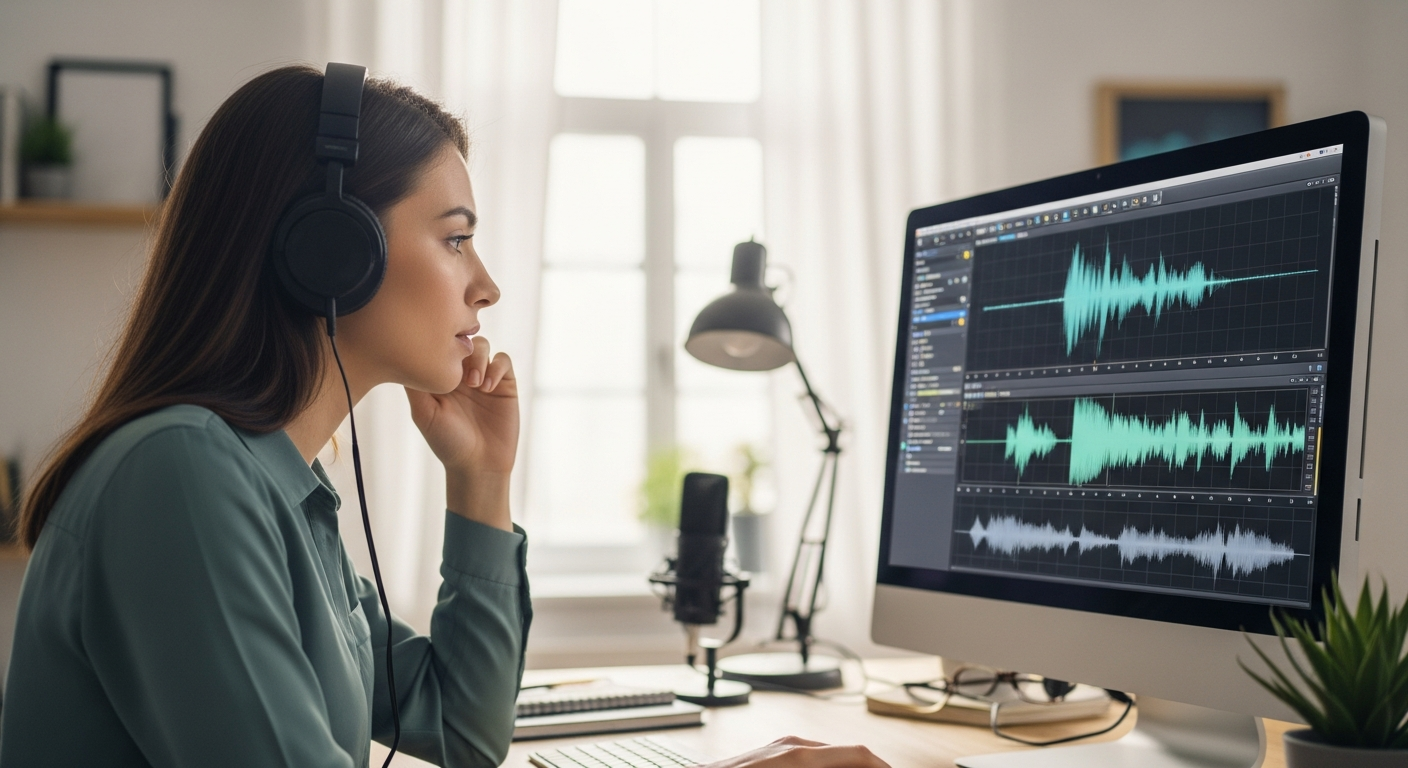
Artificial intelligence is transforming numerous fields, and audio analysis is no exception. The ability of AI to process and interpret audio data opens up a world of possibilities. It can enhance productivity across various industries.
From transcribing spoken words to identifying specific sounds, AI algorithms offer powerful tools for understanding and utilizing audio information. This article will guide you through the essentials of using AI for audio analysis. It will also highlight its key applications, and provide practical examples of how it’s being used today.
Whether you’re a researcher, a business professional, or simply curious about the potential of AI, this guide will provide valuable insights into leveraging AI for audio analysis. Get ready to explore the exciting world of AI and unlock new levels of productivity.
Understanding the Basics of AI Audio Analysis
AI audio analysis involves using machine learning algorithms to extract meaningful information from audio data. This process allows computers to “hear” and interpret sounds much like humans do.
At its core, AI audio analysis relies on techniques like signal processing, feature extraction, and pattern recognition. These methods enable AI systems to identify patterns, classify sounds, and even understand spoken language with impressive accuracy.
One of the fundamental steps in AI audio analysis is converting audio signals into a format that machines can understand. This typically involves transforming the audio into numerical representations that capture the essential characteristics of the sound.
These representations, such as spectrograms or Mel-frequency cepstral coefficients (MFCCs), serve as input for machine learning models. These models are trained to recognize specific patterns and features within the audio data.
Signal processing plays a vital role in cleaning and preparing the audio data for analysis. Noise reduction techniques, for instance, can remove unwanted background noise, improving the accuracy of subsequent analysis. Echo cancellation is another important technique, particularly in environments with reverberation.

Feature extraction involves identifying and quantifying relevant characteristics of the audio signal. MFCCs, for example, are commonly used to represent the spectral envelope of a sound, which is crucial for speech recognition. Other features, such as zero-crossing rate and spectral centroid, can be used to characterize different types of sounds.
Pattern recognition algorithms then analyze these features to identify patterns and classify sounds. Machine learning models, such as support vector machines (SVMs) and neural networks, are commonly used for this purpose. These models are trained on labeled data to learn the relationship between audio features and sound categories.
The performance of AI audio analysis systems depends heavily on the quality and quantity of the training data. High-quality data, free from noise and artifacts, is essential for training accurate models. A large and diverse dataset can help the model generalize well to unseen audio data.
Key Applications of AI in Audio Analysis
The applications of AI in audio analysis are vast and span across numerous industries. One prominent application is speech recognition, where AI algorithms transcribe spoken words into text with remarkable precision.
This technology powers virtual assistants like Siri and Alexa, enabling them to understand and respond to voice commands. AI is also used for sound classification. It can identify different types of sounds, such as music genres, animal noises, or even the sound of a machine malfunctioning.
In healthcare, AI audio analysis is used to detect anomalies in heart sounds or identify respiratory conditions based on cough patterns. Security systems use sound recognition to detect threats like breaking glass or gunshots.
Voice analytics is another significant application, where AI analyzes vocal characteristics to understand emotions, detect stress, or identify individuals. These capabilities are invaluable in customer service, security, and even mental health monitoring.
Beyond virtual assistants, speech recognition is crucial in dictation software, enabling hands-free text input. It’s also used in transcription services for converting audio recordings into written documents. The accuracy and speed of AI-powered speech recognition have significantly improved over the years.
Sound classification has applications in environmental monitoring, where AI can identify and track different types of environmental sounds. This can be used to monitor noise pollution, detect wildlife activity, or even predict natural disasters. The ability to automatically classify sounds can provide valuable insights into the environment.
In the automotive industry, AI audio analysis is used to improve the driving experience. It can detect emergency vehicle sirens, alerting the driver to potential hazards. It can also monitor engine sounds for signs of mechanical problems, enabling predictive maintenance.
In the entertainment industry, AI is used for music information retrieval, identifying songs, artists, and genres from audio samples. It’s also used for sound effects generation, creating realistic and immersive soundscapes for games and movies. AI is enhancing the creative process in the entertainment industry.
Top AI Platforms for Audio Analysis
Several AI platforms offer robust tools and services for audio analysis. These platforms cater to a range of users, from developers to businesses seeking ready-made solutions.
Google Cloud Speech-to-Text is a popular choice, offering high accuracy in speech recognition and supporting multiple languages. Amazon Transcribe is another leading platform that provides transcription services with features like speaker diarization and custom vocabulary.
| Platform | Key Features | Use Cases |
|---|---|---|
| Google Cloud Speech-to-Text | High accuracy, multi-language support, real-time transcription | Voice assistants, call center analytics, transcription services |
| Amazon Transcribe | Speaker diarization, custom vocabulary, automatic language identification | Media transcription, meeting recording analysis, customer service |
| IBM Watson Speech to Text | Custom acoustic models, keyword spotting, low latency | Healthcare, finance, customer service |
| Microsoft Azure Speech to Text | Real-time transcription, sentiment analysis, translation | Accessibility, media captioning, virtual assistants |
Beyond the platforms listed, many open-source libraries and frameworks are available for AI audio analysis. These tools provide developers with greater flexibility and control over the analysis process. TensorFlow and PyTorch are popular choices for building custom audio analysis models.
Choosing the right platform depends on the specific requirements of your project. Factors to consider include accuracy, latency, language support, and cost. It’s important to evaluate different platforms and choose the one that best meets your needs.
Many platforms offer free trials or limited free tiers, allowing you to experiment with their features before committing to a paid subscription. This is a great way to assess the capabilities of different platforms and determine which one is the best fit for your project. Consider the scalability of the platform as well.
The ease of integration is another important factor to consider. Some platforms offer simple APIs that can be easily integrated into existing applications. Others require more complex integration processes. Choose a platform that integrates seamlessly with your existing infrastructure.
How to Use AI for Speech Recognition
Using AI for speech recognition involves a few key steps. First, you need to choose an appropriate AI platform or library that offers speech recognition capabilities.
Many platforms provide APIs (Application Programming Interfaces) that allow you to easily integrate speech recognition into your applications. Once you’ve selected a platform, you’ll need to provide it with audio data.
This can be done by uploading audio files or streaming audio in real-time. The AI platform will then process the audio and transcribe it into text.
Most platforms offer options to customize the speech recognition process, such as specifying the language, adding custom vocabulary, or enabling speaker diarization to identify different speakers in the audio.
Before sending audio to the AI platform, it’s often necessary to pre-process the audio to improve accuracy. This may involve noise reduction, echo cancellation, and audio normalization. These steps can significantly enhance the performance of the speech recognition system.
When choosing a speech recognition platform, consider the languages and dialects it supports. Some platforms offer broader language support than others. If you need to transcribe audio in multiple languages, choose a platform that supports all the languages you need.
Custom vocabulary can be particularly useful for transcribing specialized terminology or proper nouns. By adding these words to the custom vocabulary, you can improve the accuracy of the speech recognition system. This is especially important for niche industries.
Speaker diarization is a valuable feature for identifying different speakers in a conversation. This can be useful for transcribing meetings, interviews, or phone calls. It allows you to attribute the transcribed text to the correct speaker, making the transcript more readable and understandable.
Exploring Sound Classification Techniques with AI
Sound classification with AI involves training machine learning models to recognize and categorize different types of sounds. This process typically begins with collecting a dataset of audio samples, where each sample is labeled with the corresponding sound category.
Next, features are extracted from the audio samples to represent the unique characteristics of each sound. These features are then used to train a machine learning model, such as a convolutional neural network (CNN) or a recurrent neural network (RNN).
CNNs are particularly effective for sound classification due to their ability to learn spatial hierarchies in the audio data. RNNs are well-suited for capturing temporal dependencies in sounds, making them useful for classifying sounds that evolve over time.
Once the model is trained, it can be used to classify new, unseen audio samples. The model analyzes the audio, extracts features, and predicts the most likely sound category based on what it has learned during training.
Data augmentation techniques can be used to increase the size and diversity of the training dataset. This involves creating new audio samples by modifying existing ones, for example, by adding noise, changing the pitch, or time-stretching the audio. Data augmentation can improve the generalization performance of the model.
Feature engineering plays a crucial role in sound classification. Choosing the right features can significantly impact the accuracy of the model. Common audio features include MFCCs, spectral centroid, spectral rolloff, and zero-crossing rate. Experimenting with different features can help you find the optimal set for your specific task.
Transfer learning can be used to leverage pre-trained models for sound classification. This involves using a model that has been trained on a large dataset of audio data and fine-tuning it for your specific task. Transfer learning can save time and resources, especially when you have a limited amount of training data.
Evaluating the performance of the sound classification model is essential. Common evaluation metrics include accuracy, precision, recall, and F1-score. These metrics provide insights into the model’s ability to correctly classify different types of sounds. It’s important to evaluate the model on a held-out test set to ensure that it generalizes well to unseen data.
Practical Examples of AI Audio Analysis in Different Industries
In the healthcare industry, AI audio analysis is revolutionizing patient care. AI algorithms can analyze the sounds of a patient’s cough to detect respiratory illnesses like pneumonia or bronchitis.
This non-invasive diagnostic method can provide early warnings and improve treatment outcomes. AI is also used to monitor heart sounds for abnormalities, helping doctors diagnose heart conditions more accurately.
- Predictive maintenance in manufacturing
- Fraud detection in finance
- Content moderation in social media
- Enhanced voice search in e-commerce
- Improved accessibility for people with disabilities
In the manufacturing sector, predictive maintenance relies heavily on audio analysis. By analyzing the sounds of machinery, AI can detect early signs of wear and tear, preventing costly breakdowns. This allows for proactive maintenance, minimizing downtime and maximizing efficiency.
The finance industry utilizes AI audio analysis for fraud detection. Voice analytics can identify suspicious patterns in phone calls, helping to prevent fraudulent transactions. This technology can also be used to verify the identity of customers, enhancing security and reducing the risk of fraud.
Social media platforms employ AI audio analysis for content moderation. AI algorithms can detect hate speech, harassment, and other forms of harmful content in audio recordings. This helps to create a safer and more positive online environment for users.
E-commerce businesses leverage AI audio analysis to enhance voice search capabilities. By accurately transcribing and understanding voice queries, AI can provide more relevant search results. This improves the user experience and makes it easier for customers to find the products they are looking for.
Ethical Considerations in AI Audio Analysis
As AI audio analysis becomes more prevalent, it’s essential to consider the ethical implications. One key concern is privacy. Audio data can contain sensitive information about individuals, such as their identity, emotions, and health conditions.
It’s important to ensure that audio data is collected, stored, and used responsibly, with appropriate safeguards to protect privacy. Another ethical consideration is bias. AI models are trained on data, and if that data reflects existing biases, the model may perpetuate those biases in its predictions.
For example, a speech recognition system trained primarily on data from one demographic group may perform poorly for individuals from other groups. It’s crucial to address bias in AI audio analysis by using diverse and representative training data.
Transparency is also essential. Users should understand how AI audio analysis is being used and have the ability to control their data. This includes providing clear explanations of how AI systems work and allowing users to opt out of data collection.
Data anonymization techniques can be used to protect privacy when analyzing audio data. This involves removing or obscuring identifying information from the audio, such as names, addresses, and phone numbers. Anonymization can help to reduce the risk of privacy breaches.
Auditing AI audio analysis systems for bias is crucial. This involves evaluating the performance of the system across different demographic groups to identify any disparities. If bias is detected, steps should be taken to mitigate it, such as retraining the model with more balanced data.
Developing ethical guidelines for AI audio analysis is essential. These guidelines should address issues such as privacy, bias, transparency, and accountability. They should also provide guidance on how to use AI audio analysis responsibly and ethically.
Obtaining informed consent from individuals before collecting and analyzing their audio data is crucial. This ensures that individuals are aware of how their data will be used and have the opportunity to opt out if they choose. Informed consent is a fundamental principle of ethical data collection.
Future Trends in AI for Audio Analysis
The field of AI for audio analysis is rapidly evolving, with exciting new developments on the horizon. One trend is the increasing use of deep learning techniques. These advanced algorithms are enabling AI systems to achieve even higher levels of accuracy and sophistication in audio analysis.
Another trend is the growing integration of AI audio analysis with other technologies, such as computer vision and natural language processing. This integration is leading to more holistic and context-aware AI systems that can understand and respond to the world around them.
For example, an AI system that combines audio and video analysis could provide a more comprehensive understanding of a scene than either technology alone. Another promising area is the development of more efficient and lightweight AI models.
These models can run on mobile devices and other resource-constrained platforms, making AI audio analysis more accessible and practical for a wider range of applications. As AI technology continues to advance, we can expect even more innovative and impactful applications of AI in audio analysis.
Self-supervised learning is emerging as a powerful technique for training AI models with limited labeled data. This involves training the model to predict aspects of the audio signal itself, such as missing segments or masked frequencies. Self-supervised learning can significantly reduce the need for large labeled datasets.
Explainable AI (XAI) is gaining increasing attention in the field of AI audio analysis. XAI aims to make AI models more transparent and understandable, allowing users to understand why the model made a particular prediction. This is particularly important in sensitive applications, such as healthcare and security.
Federated learning is a promising approach for training AI models on decentralized data sources. This involves training the model on data that resides on users’ devices, without requiring the data to be transferred to a central server. Federated learning can help to protect privacy and improve the scalability of AI systems.
The development of more robust and resilient AI models is a key area of focus. These models should be able to perform well in noisy and challenging environments, and they should be resistant to adversarial attacks. Robustness and resilience are essential for ensuring the reliability of AI audio analysis systems.
Conclusion
AI for audio analysis offers immense potential for enhancing productivity and transforming industries. From speech recognition to sound classification, AI algorithms provide powerful tools for understanding and utilizing audio information.
By understanding the basics of AI audio analysis, exploring its key applications, and considering ethical implications, you can leverage this technology to unlock new levels of efficiency and innovation in your field.